|
Lack of awareness is one of the most important reasons of low level of waste management. People themselves follow wrong practices of handling garbage and at the same time they do not demand action from Urban Local Bodies. They are also not aware and sensitized about health and environmental hazardous of improper waste management
According to report of base line survey of CJP conducted in Ranchi Municipal Area most of the people do not initiate action for basic cleanliness and civic issues due to lack of awareness and motivation.
The other and more important aspect is eliciting the active participation of people in establishing the effective system of solid waste management. It becomes all the more important for the project like CJP which seeks to focuses on community action. The participation of the people can come only if they are well aware about the need and benefit of Solid Waste Management.

Thus CJP's awareness program is targeted at twin objectives:
Aware the people about appropriate practices of solid waste handling and their by changing their habits
Secure their active participation in establishing the system of Solid Waste Management.
The awareness programs may broadly be classified in three categories:
Mass
Awareness Programme
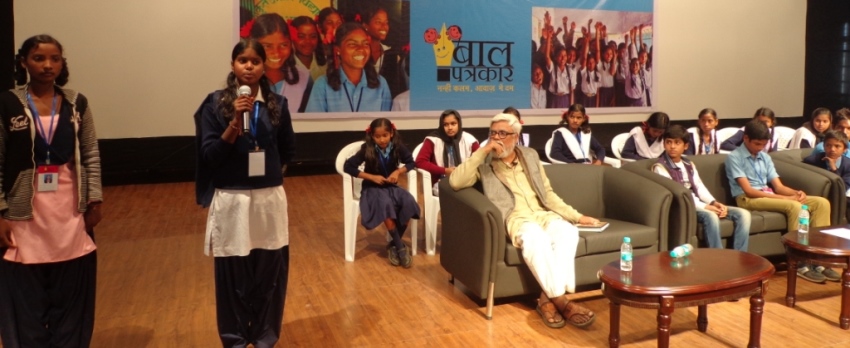
Mass awareness programs are undertaken to draw the attention of common public to the cause of solid waste management and seek their participation in the process of basic cleanliness of the city. The various activities undertaken are:
Organization of Rallies
Placement of Hoardings
Participation in Exhibitions/ fairs
Organization of Road Shows
Promotion of Road Side Garden
Miniatures
Promotion of Community Garden
Development of Children Park
News Paper and Television Ads
Awareness Programme for CJP Intervention Area
In the CJP intervention areas, higher co-operation of the community has been ensured not just in terms of dos and don'ts but also in terms of resources like time, financial and material resources as well assistance in developing and establishing system of community based solid management. For all this the causes of poor heed on civic issues and poor management of waste have been continuously inculcated in people's mind on priority basis. Therefore, more intensive awareness generation program have been organized for the community in direct intervened areas of CJP. Other than the mass awareness programs, the additional awareness activities undertaken in these areas are:
Slogan Writing
Posters/ Pamphlets/ Calendar distribution
Signage
Community Meetings
Events leading to major breakthrough..
LAUNCH OF CJP
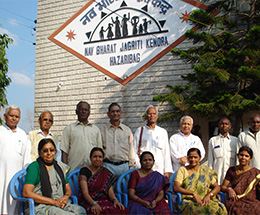
Clean Jharkhand Project is an unprecedented initiative, which has a noble goal of a rather overwhelming magnitude. Keeping this fact in mind, the launch of the project was an equally mega event. A prestigious and memorable event marked the launch with a 19-day program in tow. The magnificent launching took place on 16 th Nov 2002, while the following days were specifically reserved for various awareness generating activities. The project focused a major share of its attention on spreading awareness among its stakeholders. For it is them for whom the project is envisioned and is now being implemented. On 16 th November 02 Clean Jharkhand Project was launched by the former Chief Minister of Jharkhand, Sri Babulal Marandi at hotel Ranchi Ashok.

The chief minister released the brochures of Clean Jharkhand Project and of NBJK after an introductory speech of the Executive Director, NBJK. The chief minister inaugurated the project with lighting the lamp and blessed the occasion with an inspirational speech. Some reflection of his speech is enumerated as follows- Community based waste management is indeed a commendable task which is to be taken by the inhabitants of the city. Though municipality is given the responsibility for waste disposal in the city, the people of urban community should take it as a collective responsibility to keep their surrounding and neat and clean. NBJK has taken the initiative for community awareness and waste management in the city in collaboration with the government. But the key to sustainability of the project lies in the hand of the people and that's why attitudinal change of the community members is of utmost importance.
Major Activities at the Launch of CJP (1 st -19 th November, 2002)
-
Cleanliness fortnight in collaboration with Ranchi Municipal Corporation and cultural shows
-
Painting/Essay Writing/Declamation Competition among the School students.
-
Press conference
-
One Day Orientation workshop on Community Based Approaches to Solid Waste Management and Launching of the Project by Chief Minister, Jharkhand State
-
Talk Show for Municipal Officials on Municipal rules and Provisions
-
Cleanliness drive by 650 school students
-
Prize Distribution for School/District level events
Safai Jagran Yatra (Awareness Rallies)
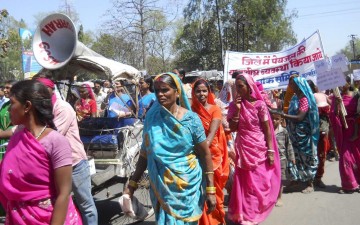
You may be aware of several Jagran Yatras but this would be quite a unique for you; Safai Jagran Yatra. This Jagran Yatra was not to propagate the values of ethics and morality rather it was to propagate the value of cleanliness and waste management. Clean Jharkhand Project has been instrumental in organizing these rallies on a regular basis. Apart from organizing Small rallies and Jagran Yatras, Clean Jharkhand Project launched a State Level Jagran Yatra (covering the 14 districts.) in the district of Dumka, Jharkhand, on 1st November 2003 and after covering 12 other districts of the State it concluded in Ranchi on the 14th of that month.

As part of this Yatra, cultural programs were organized by our troupe at every important locality or square of these fourteen districts. These cultural programs included, Skits and Songs specially made on waste.
The Jargran Yatra proved effective in sensitizing not only the common people but also Municipalities of the respective districts who further contacted CJP team to seek information on Solid Waste Management. Thus this Yatra became instrumental in replication of Solid Waste Management model in Jumari Tiliaya and Hazaribag Municipality.
ENVIRONMENTAL
EDUCATION
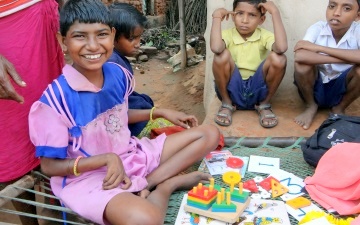
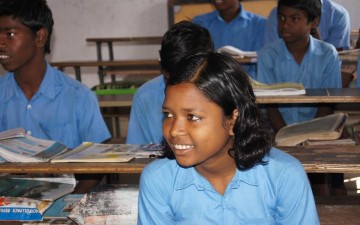
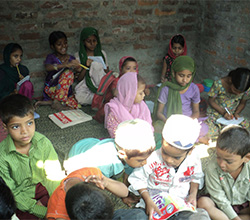
Environmental education has sprouted as a pragmatic educational response to the problems and concerns of environment. The concept of environmental education is still evolving and awaiting institutionalization in the education system. As such there is dire need to understand the subject in a proper way. Environmental Education has two components environment and education. Environment is sum total of all the conditions and influences that affect the life and development of organisms. Education involves knowledge understanding and application of facts and concepts pertaining to that discipline and forming desirable beliefs, attitude, disposition, value as well as inculcation of interest pertaining to that discipline. Thus environmental education aims to develop interests, application and skills etc for at least the natural Environment, so as to preserve and improve it for the welfare of mankind.
Three important connotations of Environmental Education are:
Education through Environment-Here environment is viewed as medium of instruction and transaction.
Education about environment-Here the biophysical environments, that constitute and support the human environment and determine the human quality of life need to be explored and understood, for a purposeful and gainful management, monitoring, harnessing and developing the human life supporting systems in sustainable way.
Education for Environment- Education for conserving,protecting and improving environment. This involves diagnosis and identification of environmental problem and working towards their solution.
Goal of Environmental Education
Internationally decided goals of Environmental Education
to foster clear awareness of the concern about economic, social, political and ecological interdependence in urban and rural areas.
to provide every person with opportunity to acquire the knowledge, values, attitude, commitment and skills needed to protect and improve the environment.
to create new pattern of behavior of indicvidual, group and society as whole towards environment.
Objective of Environmental Education
Awareness: To help social groups and individual acquire awareness and sensitivity to total environment and its allied problem.
Knowledge: To help social group and individual gave a variety of experiences in and acquire a basic understanding of the environment and its associated problems.
Attitude: To help social groups and individual to set of value of feeling of concern for the environment and motivational for actively participating in environment improvement and protection.
Skills: To help social group and individual with the opportunity to be actively involved at all levels towards resolution of environmental problems.
FACTS
- Important Dates
|
January
National Youth day
|
February
World water day
28 National science day
|
April 05 National sea coast day
07 World health day
12 World space day
22 World earth day
|
|
May
11 Population stability day
21 World forest day
22 Biodiversity Day
31 Anti smoking day
|
June
05 World Environment day
08 world Ocean day
|
July
01 Van mahotasav
11 World population day
|
|
August
05 Hiroshima day
19 World tribal day
|
September 05 Teachers day
16 Ozone day
|
October
03 nature day
07 World Habitat Day
08 World Animal Day
16 World Fertilizer day
|
November
07 C.C Raman day
|
December
01 World Aids day
02 National pollution Control day
03 World conservation day
04 Chemical day
14 National energy conservation day
23 Farmers day
24 Consumer day
|
THEMES OF WORLD ENVIRONMENT DAY
2004 : Wanted! Seas and Ocean : Dead or Alive
2003 : Water-Two Billion people are dying for it.
2002 : Give earth a chance
2001 : Connect with World Wide Web of Life
2000 : The Environment Millennium-Time to Act
1999 : Our Earth-Our Future-Just Save It!
1998 : For Life on Earth-Save our Seas
1997 : For life on Earth
1996 : Our Earth, Our Habitat, Our Home
1995 : We the peoples: United for the Global environment
1994 : One Earth one family
1993 : Poverty and the Environment- Breaking the Vicious circle.
1992 : Only one earth, care and share
1991 : Climate changes: Need for Global Partnership
1990 : Children and the Environment
1989 : Global Warming, Global Warning
1988 : When people put the environment first, Development will last
1987 : Environment and shelter: More than a Roof
1986 : A tree for Peace
1985 : Youth: Population and the Environment
1984 : Desertification
1983 : Managing and Disposing Hazardous waste: Acid rain and energy
1982 : Ten year after Stockholm (Renewal of Environmental Concerns)
1981 : Ground Water: Toxic chemicals in Human Food chains
1980 : A new challenge for new Decade : Development without distruction
1979 : Only one Future for our Children-Development without destruction
1978 : Development without destruction
1977 : Ozone layer Environmental concern: land Loss and soil Degradation
1976 : Water: Vital resource for life
1975 : Human settlement
1974 : Only one Earth
Do you know??
India is one of the megabiodiversity country.
Hots spots in India-North-east India, western Ghats, Andaman and Nicobar Islands
In India there are 45000 species of plant out of which 18% of plants in India are Endemic and 33% of endemic plants are flowering plant.
There are 16 major forest types in India that are distributed in 10 distinctive biogeographic zones.
Forest types of India contain 45000 species of plants which constitute 6.4% of plant species.
India has 77000 species of animal out of which there are 50000 species of insects, 130000 species of butterflies,12000 species of birds, and 453 species of reptiles.
Forest land is said to cover 75000 million hectares ie 23% of land mass
In our country 13 lakh hectare of forest are destroyed. Need of fuel wood destroys 10-15 lakh hectare forest per year in India
Waste generated by per person per day is 150-350 gms.
There are certain bioindicator plants. Their number decreases when the concentration of pollutant increases. Some bioindicator plants are
Moses, Lichens and few Fungi-Sulphur dioxide and halide
Pine (needles) - Sulphur dioxide
Sorghum (leaves)-Fluoride
Festuda Rubra- Concentration of mercury
Plastic when burnt releases deadly compound called dioxin
Health Effects of Dioxin identified as carcinogenic.
Reproductive Effect Decreases fertility, certain hormone changed.
Development effect Birth defect & impairs learning ability.
Other effect Cause damage to nervous system.
|