COMMUNITY ACTION    


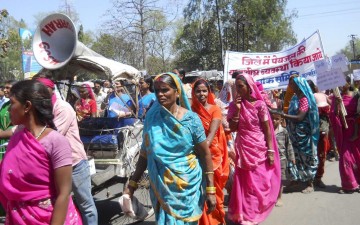
No System of Solid Waste Management can be sustainable without community being a crucial player in it. It is the community which is mostly closely associated with Solid Waste generation and handling. No amount of effort by external stakeholder can bear result if community does not follow the proper storage and disposal practices. Not only this, the Urban Local Bodies, an agency responsible for Solid Waste Management has scarce resources available with it for this function. It requires the co-operation of people. The scenario of poor solid waste management also attributes to the lack political and administrative will power. In such scenario the community need build pressure on service providers to initiate action.

The community keeps raising its voice every now and then but it is mostly unorganized and unsystematic. Besides, the community has not come forward to share the responsibility. This is due to lack of organization and leadership.

The Community Action component of CJP proposes to organize and build capacity of community to initiate action for Solid Waste Management. The focus of CJP is to create and strengthen the community based institution and system of Solid Waste Management .

APPROACHES OF CJP

1. Ward Approach

The CJP enters into an agreement with Ranchi Municipal Corporation (RMC) to adopt a ward for its intervention and RMC agrees to put its resources to the service of CJP. The CJP takes the responsibility of supervising and monitoring the cleanliness at community level. The CJP also takes the responsibility of creating system of solid waste management in co-ordination with RMC for effective utilization of resources and increasing the participation of community. The gap of resources is also met by CJP.

As per the current agreement system, the RMC provides the services of road/street sweeping and drain cleaning. It also provides the service of waste transportation from temporary dumping sites/ dustbins to the final disposal or processing site. Though the RMC provides the service of street sweeping and drain cleaning, it does not have adequate staff strength to meet the entire gap. Therefore the gap is met by CJP by providing extra labour for this purpose.

The CJP has employed Safai Mitra for door to door collection of waste whose payment is made by collecting community contribution.

The CJP has also created system for effective utilization of available resources :

Beat Allocation : The bit allocation system has been evolved for proper management of cleaning staff. The ward has been divided into bits. The days wise allocation of bits has been to cleaning staff according to which they visit their allocated area for carrying on cleaning work without any confusion and duplicacy.

Tractor Scheduling To evolve the system of waste lifting, mapping of tractor movement has been done which gives details of sites from where the waste has to be lifted and route to be followed. It also provides the tentative timings. This has been done after conducting the study of quantum of waste generation and disposal sites. The system would ensure that waste has been lifted from all the sites and also gives the shorted route to be followed thereby saving the resources.

The ward approach has been very effective in collaboration with RMC as the RMC resources are allocated at ward level.

2. PDC Approach

The approach is adopted for group of households scattered from main area. The CJP provides the service of cleanliness with support of community. It deploys Safai Mitra for door

to door collection of waste, road sweeping and drain cleaning and transportation of garbage to the temporary disposal site from where it is lifted by RMC vehicle. It mobilizes the community contribution for payment to Safai Mitra.

3. Entrepreneurship Approach

With the changing time, one has to be innovative enough to adapt itself to the changing needs as all know and believe:

Nothing but change is permanent.

Clearly CJP does not think otherwise. During its intervention the project felt that there are areas where high community participation can't be mobilized due to very busy lifestyle of the people. However, this community can well afford the private services. In such locality, the CJP is trying to mobilize entrepreneurs in this field in a big way. These entrepreneurs collect fifteen rupees from each shop/ household per month and after payment to the Safai Mitras rest of the money collected is to be kept by these entrepreneurs. Their work is to ensure cleanliness in these areas through door to door collection of waste and its timely and proper disposal. As a starter, Clean Jharkhand Project has provided dresses, trolleys and other equipments, including trainings to the Safai Mitras working in this area. Ranchi Municipal Corporation has also been requested to work in close coordination with them.

Initiatives at Community Level

1. Regular Cleaning

The CJP ensures regular cleaning of road/ drain and other public places in its operational area with support of Ranchi Municipal Corporation who provide its staff and equipments for this purpose. The requirement of extra labour and equipment is born by CJP.

As per the agreement with RMC, the CJP deploys Safai Mitras for door to door collection of waste while RMC provides the CSO, the Jamadar and the Safai Karmis along with their equipment and vehicle. The lifting and transportation of waste is done by RMC. The monitoring and supervision of entire cleaning work is done by CJP Supervisors.

2. Door to Door Collection of Waste

The CJP initiates the practices of door to door collection of waste. For this purpose it deploys Safai Mitra along with trolley.

Door to door collection of waste by Safai Mitra

WHO IS SAFAI MITRA ?

3. Formation & Strengthening of Pocket Development Committees

The Pocket Development Committee is the key strategy to institutionalize Community Action. The PDC consists of community representatives who organize together to take action on behalf of community.

The CJP undertakes capacity building of PDCs to develop and strengthen them as effective institution on Solid Waste Management. The PDCs are imparted training on solid waste management as well as institutional and financial management. The PDCs are further federated to ward committees and than to Nagar committee.

These committees are envisaged to manage solid waste after withdrawal of CJP.

WANT TO FORM A POCKET DEVELOPMENT COMMITTEE?

What is a Pocket Development Committee?

In common parlance PDC or Pocket Development Committees is a group of residents of a colony responsible for managing solid waste and other civic issues of the community pocket.

Who forms it?

It is formed by the residents themselves in facilitation from the project. In order to function it follows certain guidelines and conducts meetings regularly to update the civic conditions of their colony and also other activities related to beautification of it.

How it is formed?

•  Informal meetings in the colony.

•  Picking up interested people for Solid Waste Management of the colony.

•  2-3 informal meetings with interested people.

•  Door to door visit by the interested residents.

•  Formal Meeting of as many residents as possible.

•  Decision on who would be the President, Treasurer, Secretary and the General Members.

•  Decision on the role of the office bearers, Safai Mitra, RMC and CJP.

•  On payment and work of Safai Mitra.

•  Monitor the work of Safai Mitra.

•  Overall Cleaning & beautification the colony.

•  Documentation of the above meeting and kept as a record for reference

Institutional Framework:

Size : Household to be covered in a Pocket Development Committee will be not less than 100 & not more than 300.

General body : General body will be constituted by involving one member from each participating HH.

Working committee : One working committee will be constituted among the members of General body comprising of 7-11 members.

Office bearers : Three office bearers among the members of working committee will be elected, i.e. President, Secretary and Treasurer. Term of each office bearers will be one year, while after one year they can be re-elected for another term.

Office bearers : Three office bearers among the members of working committee will be elected, i.e. President, Secretary and Treasurer. Term of each office bearers will be one year, while after one year they can be re-elected for another term.

Working:

Community meeting : General body : General body members will meet on yearly basis and review the progress in general and plan out the strategy for further course of action. This meeting will be presided by the president, PDC . Working committee : Working committee members will meet on monthly basis and review the works of Safai Mitra , civic issues, contribution by the participating HHs, etc. This meeting will be presided by the President of the PDC.

Quorum : 1/5 th of the total participating HH in the general body meetings and ½ of the total working committee members must be present during working committee meetings.

Pocket level Micro Planning: For meaningful development of the pocket an action plan will be prepared with close participation of the members- PDC and further will be placed before the municipal authorities for action.

Peer counseling : Each participating HH would advocate to other non members/ neighbors about the good practices in SWM by his PDC .

Financial Management:

Community contribution: (a) Repairing cost for Trolley/ Rickshaw and other recurring nature costs will be borne by the PDC . (b) Each participating HH will contribute minimum of Rs. 10/- by 5 th day of the each month. Out of total collection, Rs. 1800/- of share of collection will be paid to the Safai Mitra as the part of his honorarium and rest can be used for various community development purposes as per PDC's discretion.

Kosh management : A joint bank account with the name of PDC will be opened in any nationalized bank. Signatories of this bank account will be president and secretary (compulsory) / treasurer (optional). Rs. 500/- may be kept by secretary for meeting out emergency & other petty requirements, whereas for withdrawal of any further amount must get approval of the working committee. Without this further remittance from this account will be banned.

Responsibilities of the Office Bearers- PDC

President :

  1. President will act as a leader to the PDC . He will be a team builder, motivator, innovator, mediator, counselor, communicator, listener, thinker, planner, organizer, guide and friend.
  2. He will chair all the meetings of general body and working committee meetings.
  3. He can call interim meetings of general body and working committee.
  4. He will assign jobs to different members and monitor their works.
  5. Any letter from the PDC will come out only after his signature/ consent.
  6. He will be a linkman between municipality/ other agency/ department and act as per the general demand of the PDC .
  7. His term will be of one year but he can be re-elected for another one term only.
  8. He will be responsible to the general body.
  9. He will be the chief advocator of the good practices in SWM by his PDC.

Secretary :

  1. Secretary will be the next chief to the PDC . He will perform all the duties of President in his absence.
  2. As the compulsory signatory, he will be chief responsible for the use of the fund generated by the members. For this, he will keep watch of every remittance and utilization of funds.
  3. He will act as per the guidelines and close coordination with the President.
  4. He will keep all the contribution records and accept the same on behalf of the PDC.
  5. He will take the attendance during the meetings and record minutes in the minute book.
  6. He will send invitation along with agendas for the meetings to the concerned members.
  7. He will take care of all the records generated with confidence and safety.
  8. As the optional signatory, he will also be co-responsible for the use of the fund generated by the members. For this, he will keep watch of every remittance and utilization of funds.
  9. He will remain in close touch with the safai mitra , assign him duties, ask about his problems, take note of his progress, regular payment of honorarium, replacement, etc.

He should note that the working relationship between the President and Secretary is the key to the success of the PDC . Therefore respect and co operation between them is very much essential.

Treasurer :

  1. He will prepare financial records and present it during the meetings.
  2. He will deposit all the money received from different sources to the bank and withdraw amount as per the need.
  3. He will make genuine payments to the parties and take their receipts.
  4. As the optional signatory, he will also be co-responsible for the use of the fund generated by the members.
  5. He will motivate members for regular and timely deposit of subscription.

Funds are Oxygen for any successful implementation and it is treasurer who provides the Oxygen.

Role and responsibility of a PDC:

Apparently the roles and responsibilities of the PDC can be broadly divided into three important categories:

•  Towards the residents

•  Towards Safai Mitra

•  Towards Ranchi Municipal Corporation

Towards the residents:

PDC holds a very significant responsibility towards the residents. They are the ones who are the mouthpiece of the residents on the SWM and civic issues of the colony. They have to see that maximum number of residents become the member of PDC so that accountability of the colony's work is shared by more residents which would in turn increase the efficiency of the PDC. They have to see that colonies civic issues are taken up democratically and in an unbiased form. They have to manage the funds generated from the door to door collection from each household. They also have to oversee cleanliness activities. For instance they have to see that the drains are in proper condition, Sm is working regularly, residents do not burn or throw the waste in the unwanted places, etc

Towards Safai Mitra

The PDC is also responsible towards the Sm. It has to screen the Safai Mitra before employing. It has to pay him on time by collecting money from the residents. It has to maintain the rickshaw trolley and other equipments, monitor Safai Mitra work and take care of him as any organization does to its employees.

Towards RMC

The PDC is also responsible for making the RMC staff known to the residents. RMC staffs generally remain aloof from the residents thus making it difficult for the residents to catch hold of them and remind them of their responsibilities. The PDC also takes care of the dust bins and sees that lifting by Ranchi Municipal Corporation is done regularly. In case there is a problem, it complains to the Ranchi Municipal Corporation.

The responsibility of a PDC can be further summarized as:

  • Sharing of the responsibilities among the members
  • Keep the contribution records and maintain the minutes register.
  • Monitor the Safai Mitra's work (Assign him duties, solve his problems, take note of his progress, regular payment).
  • Organize the meetings for the community.
  • Take initiative in other civic problems raised by the community (link group between CJP, Other Agency / Department and the community).

Safai Mitra

Who is Safai Mitra?

They are the stakeholders in the Clean Jharkhand Project who handle the task of community level cleanliness. Their prime responsibility is daily door to door collection of waste, collection of waste from community bins and transportation of waste to the temporary disposal sites. They also accomplishes the task of street sweeping and drain cleaning as and when required. They are provided with essential tools and equipments for smooth and safe disposal of their responsibilities. Thus the important task of keeping the city clean lies on their shoulder.

The Safai Mitra mostly come from low socio-economic background hardly literate and having very insecure economic life. Under the CJP they are groomed through continuous trainings and capacity building. The employment as Safai provides them a regular source of income providing them a level of economic security. The effort is also made to provide them recognition and social security.

ROLES & RESPONSIBILTIES

•  DOOR TO DOOR COLLECTION OF WASTE

According to the Supreme Court Guideline on Solid Waste Management in class-I cities, biodegradable waste should be daily collected from the door step. The Safai Mitra reaches every doorstep on his tricycle and informs his arrival through blowing his whistle. The member of the house come out with the garbage and put it in his trolley. One Safai Mitra covers 150 200 households.

•  COLLECTION OF GARBAGE FROM COMMUNITY DUSTBIN

Along with door step collection of waste, the Safai Mitra also collects garbage from community dustbins within his allocated area.

•  DRAIN CLEANING:

In the Ranchi City, the service of drain cleaning is provided by Municipal Corporation. However due to inadequate number of field staff with corporation, it is neither able to meet the requirement. Therefore, chocked and overflowing drains are the very common problem in most of the colonies of the city. This poses serious threat to the cleanliness and sanitation situation of the locality. Therefore, the in the areas where requirement of drain cleaning is not being met by Municipal Corporation, the Safai Mitra is assigned this responsibility.

•  ROAD SWEEPING :

The situation of road sweeping is similar to that of drain cleaning. This service is being provided by Ranchi Municipal Corporation. But due to lack of staff, this service is not upto the mark in all area. In such areas where road sweeping is either not undertaken or irregular by Municipal Corporation, CJP put it Safai Mitra to this service either on daily basis or on the days when RMC staff is absent.

5 . TRANSPORTATION TO TRANSIT POINT OR COMMUNITY DUSTBIN

The Safai Mitra collects the waste from households and from community dustbins in his trolleys and transport is to temporary disposal site on from where the garbage is lifted and transported to final disposal or processing site by Municipal vehicle.

Payment to Safai Mitra:

The Safai Mitras are paid for their services following the provision of minimum wage act. For this purpose the hours of work and number of task performed by them is taken into consideration. The Safai Mitras have been categorized into three grades based on the nature of job performed by them and hours of tasks performed by them:

Grade

Job Responsibility

Hours of Work

Payment

A

•  Door to Door Collection of Waste & Transportation to transit point.

•  Road Sweeping

•  Drain Cleaning

•  Maintaining the cleanliness of dustbin

5 7 hours

@ Rs.70/-day

B

•  Door to Door Collection of Waste & Transportation to transit point.

•  Road Sweeping

•  Drain Cleaning

Or

•  Door to Door Collection of Waste & Transportation to transit point.

•  Road Sweeping

•  Maintaining the cleanliness of dustbin

Or

•  Door to Door Collection of Waste & Transportation to transit point.

•  Drain Cleaning

•  Maintaining the cleanliness of dustbin

4 hours

@ Rs.60/- day

C

•  Door to Door Collection of Waste & Transportation to transit point.

•  Road Sweeping

Or

•  Door to Door Collection of Waste & Transportation to transit point.

•  Drain Cleaning

Or

•  Door to Door Collection of Waste & Transportation to transit point.

•  Maintaining the cleanliness of dustbin

> 4 hours

Rs.55/- day

Social Welfare Schemes

1. Group Insurance

The Safai Mitras mostly come from poorest socio-economic background who as almost no support back support system available in the adverse circumstances. Therefore , the project asserting its commitment to their well being is in process to provide them group insurance policy which would cover the risk of accident and death. has been taking special care to assert its commitment towards the well-being of . And in this direction some concrete steps have been taken.

2. Health Camps

Despite the precaution, the Safai Mitra are sometimes exposed to the toxicity which lead to various diseases. Moreover, their already poor health and nutritional status make them vulnerable to various diseases. Therefore, CJP organizes health camps at regular intervals where they are provided with free health checks, counseling and medicines.

3.  Welfare Fund :

Welfare fund has been created to make them fund available in time of emergency. Under this, Rs.100 is compulsorily deducted from the monthly salary of Safai Mitra and put in Welfare Fund. They are provided interest on this saving which is always above interest rate provided by Banks. The Safai Miras are provided loan in time of need from this fund.

Recognition & Reward System

1. Safai Mitra Convention:

Though the services provided by the Safai Mitras are very crucial to the well being of society. Given our socio-culture context of little to respect manual labour work, they enjoy little respect and recognition in society. The Safai Mitras convention is organized to publicly recognize the services of Safai Mitras. The purpose of the convention is that Safai Mitras themselves and public at large recognize the value of their services and develop sense of respect them

All the Safai Mitras are invited to participate in the convention. The representatives from Municipal Corporation, Citizen and other concerned departments are invited. The discussion takes place on the valuable contribution of the Safai Mitra to the well being of people and beautification of City. The constraints faced and support required by Safai Mitras is also discussed. Thus it provides them a forum to share their problems and express their views. The other stakeholders also get sensitized towards them.

The various welfare schemes and incentive packages are also announced.

2. Best Safai Mitra Award:

The services of Safai Mitras require hard labour and devotion. To keep their spirit high, their good work needs to be rewarded. The project has set up a yearly price for the 3 best Safai Mitras and consolation prices for the rest.


Copyright : Nav Bharat Jagriti Kendra  <<<Home   | Sitemap                                         'Powered by : COMPUTER Ed.'