Micro Credit and Socio-Economic Development

Socio-economic development is one of the core components that NBJK envisions for an empowered society. The government alone is unable to fulfill the needs and aspirations of the people. In Bihar and, especially, in Jharkhand social fragmentation is a major factor behind unstable governance. This has affected policy, decisions, and delivery systems at large. As a result, the opportunities for a dignified livelihood are limited. NBJK, in partnership with government agencies, national and international donors, and various other stakeholders, has implemented several welfare initiatives in order to enhance the socio-economic development process for oppressed communities residing in remote rural pockets and in neglected urban slums.
NBJK’s socio-economic development program follows a three-pronged strategy:

  • Organizing the beneficiaries into groups/community institutions

  • Capacity building of the individuals and the groups

  • Facilitating resources for livelihood and employment

bullet Micro-Credit
bullet Employability Training Program (Rozgar)
bullet Watershed and Agriculture Development


Micro-Credit

NBJK believes that in order for communities to achieve any meaningful development, households must be empowered to generate wealth and sustainable incomes. The micro credit program was established in 1994 to assist impoverished women and men in gaining access to credit, allowing them to initiate income-generating activities and, thus, become self-sufficient. Through Self-Help Groups (SGHs) and Joint Liability Groups (JLGs), NBJK’s Micro Finance Office (MFO) provides financial support through small loans.

Micro credit programs are operational in the Jharkhand districts of Hazaribag, Ranchi, Khunti, and Koderma, as well as the Bihar district of Patna. This program originally received funding from CORDAID and CARE India but achieved sustainability in 2000. As a result of these programs, employment opportunities have greatly enhanced with the increase in various activities, such as animal husbandry, fodder making, vegetable growing/selling, pottery, jewelry making, etc.
Each Self Help Group is made up of 10 to 20 women members. These groups hold weekly meetings, collecting a small amount, usually 10 to 20 rupees, from each member to contribute to the group’s savings. The group is then able to grant loans from this savings account in cases of emergency, charging an interest rate of 3 to 5 percent. After a group has successfully met and collected savings for 12 consecutive weeks, the members of the group are eligible to receive a loan from NBJK. The maximum amount one is able to qualify for a first loan is Rs.8000. This amount then typically increases by Rs.5000, depending on the member’s repayment history. The maximum loan possible is Rs.50,000. The interest collected on these loans is a 12.5% flat rate. After a 15-day moratorium, the loans are repaid in 45 weekly installments that are collected at the SHG meetings.
There are currently 1894 SHGs in operation, with a total of 27,235 members. Of these members, 7807 are receiving loans from NBJK. Since the onset of this program, the SHGS have collected a savings of more than Rs.33,000,000 and NBJK has disbursed nearly Rs.500,000,000 to SHGs in the form of loans. The SHG loan repayment rate is 98.69%.
Though Joint Liability Groups operate similarly to Self Help Groups, there are a number of differences. First, each JLG is comprised of a maximum of five male members. They are temporary groups that are formed solely for the purpose of receiving credit. They do not hold meetings and they do not collect any savings from the members. Also unlike SHGs, members of JLGs can only receive a loan in order expand existing activities. They are unable to initiate new income generating activities with the credit from the program. Loans are repaid on a monthly basis and charged a flat interest rate of 12.5%.
There are currently 423 JLGs in operation and a total of 2101 members, all of which are receiving loans from NBJK. Since the onset of this program, NBJK has disbursed over Rs.100,000,000 to JLGs in the form of loans. TheJLG loan repayment rate is 99.09%.

Case Study:

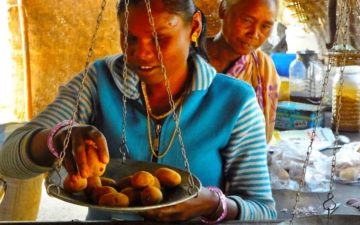
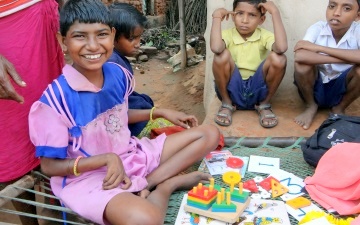
Neelu Devi’s smile is not without cause. She disseminates it as the proud mother of a young girl who is attending an English school hostel, as a sensible wife, and as a trusted shopkeeper in the Malahipakree slum area in Patna. Neelu joined a women’s Self Help Group (SHG) in 2000 and is now the treasurer of the group. Neelu’s initial loan from NBJK’s Micro Credit Program was for Rs. 1000. With this amount, she was able to start her own business. Neelu is currently repaying a loan for Rs.16,000 and owns a small shop stocked with more than Rs.100,000 worth of miscellaneous daily use items she sells to the people living in her community. Neelu is unable to get a higher education for herself, but is determined to educate her children properly. Neelu’s husband works as a driver for a private security agency and together they are able to provide their children with access to quality education and healthcare.


Employability Training Program (Rozgar)

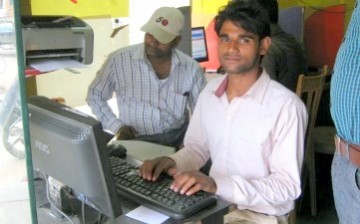
NBJK provides this market-led skill development program for lower-middle income group youths in the Dumka, Khunti, Ramgarh, Koderma, and Hazaribag district headquarters. The goal of this program is to empower youths with technical skills that are suitable for the job market. In assisting youth in gaining employment, Rozgar is also supplying the market with an adequately trained entry-level work force. The seven training centers provide three month-long courses under a comprehensive ITES program, including computerized accounting, publishing, and computer applications.

 Courses are also offered in bedside patient assistance and cellular phone repair. The cost per training course is Rs.500. A total of 8692 students have received training under this program and 800 are currently in the process of being trained. These students experience an overall increase in confidence upon the completion of their training and 60% are placed in wage employment.

Case Study:

Fahrat Jehan belongs to a lower-middle class, conservative Muslim family of Topa colliery. Her father, Muhammad Jamal, supports the family with the meager salary he earns as a bus agent. Fahrat successfully passed the matriculation board examination and wished to continue her studies. Due to family circumstances, Fahrat was unable to fulfill this wish and, instead, decided to receive computer training at the Rozgar center in Ramgarh. Throughout her time at the Rozgar center, the once introverted Fahrat was able to build her confidence and is now employed as a data entry operator with the firm Soft-Tech Technology in Ranchi. She is now earning a monthly salary of Rs.3500 and is able to contribute to the family income.


Watershed and Agriculture Development

Water poses a great challenge in India, both in terms of pollution and scarcity. Although Jharkhand receives high levels of annual rainfall, the plateau like land structure makes it difficult to save this water. Rivers often become contaminated due to industrial runoff. In response to this issue, NBJK, with the support of DRDA and NABARD, developed the Watershed Development project in the districts of Dumka, Pakur, Hazaribag, and Koderma. This project is designed to promote water conservation by raising awareness of the issue and building watershed management structures. The construction of field and contour bunds, farm ponds, check dams, irrigation wells, and plantations has also helped to generate employment in rural areas.

 NBJK, with support from Sir Ratan Tata Trust, has also been working to improve the land and water management practices in the Muhru block of the Khunti district, where there is an absence of proper irrigational facilities and appropriate agro-techniques. The tribal population in this area has also been economically weakened by the lack of alternative livelihood options. In an attempt to address these issues, NBJK has developed a strategy that includes the stabilizing the production of Kharif paddy, promoting alternative crops, constructing water harvesting structures, promoting off-farm livelihood sources in the project area. NBJK has also sought to promote and enhance lac production in this area, through the provision of training and technical support.
Under NBJK’s watershed and agriculture development program, 338 farm ponds, 137 wells, 200 reservoirs, 10 micro lift irrigation schemes, and 14 check dams have been constructed. 100 trainings have been held since the program’s onset, reaching about 5,000 farmers. 359 beneficiaries have since adopted rice intensification and 372are now cultivating lac.

Case Study:

Barnawas Na, 35 years old, lives in the Digri village of the Murhu block in Khunti. He is a commerce graduate, turned progressive farmer, with 6 acres of land. Barnawas participated in an NBJK training program and was intrigued by the idea of being able to earn a profit through agriculture and associated activities. With a proper understanding of irrigational facilities and resource management, he constructed two ponds. In addition to using an integrated approach to custom farming, this tribal man is involved in horticulture, lac cultivation, and fishery. This combination of activities allows Barnawas to earn an income of Rs.50,000 each year. He wishes to form a group of like-minded growers and to serve as a resource for his community.


Powered by : COMPUTER Ed.